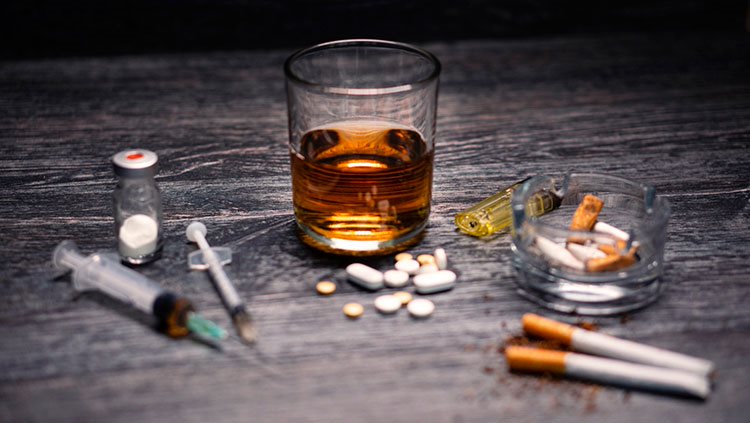
Driving to nearly any town in American, you can see the result of our massive issue with drug addiction. Children can no longer play independently in public spaces due to the risk of needle exposure. Areas of town are avoided due to the appearance of individuals barely alive, resulting from their addiction to illegally obtained drugs. The beautiful place where I was raised has a truly breathtaking scenery, yet a sinister layer hides under the surface. A layer in which addiction to drugs and alcohol holds an unbreakable bond.
Take a moment to read these current news articles, highlighting some of the current issues within the United States:
- https://www.cbsnews.com/boston/news/used-needles-boston-cleanup/
- https://www.wbaltv.com/article/brooklyn-community-rally-calling-city-action/68083517
- https://abc7news.com/post/san-francisco-homeless-sf-drugs-open-air-drug-market-van-ness-willow-street/13420019/
In 2023 the Office of the Surgeon General reported the annual financial strain to the United States for illicit drug abuse totals $193 billion and $249 billion due to alcohol abuse. These are staggering numbers not only represent the individuals affected, but their family and country whom also suffering the consequences. The United States is unfortunately at the forefront of the addiction epidemic. We have very high numbers of addiction, but also the number for those seeking treatment is also lower than other countries (United Nations, 2025). The United Nations (2025) estimates that in the year 2023 the number of people globally abusing substances has grown 28% in the past 10 years, to a staggering 316 million.

Looking at the numbers you might ask, but why us? Did our quest for profit from pharmaceuticals drive us towards a destiny of never ending addiction? We may be able to look at ourselves in answering these questions. Society tends to prefer hiding and covering our less attractive flaws. When our pain crisis was first beginning, it is difficult to believe that those who stood to profit the most, did not realize the after effects. When I was a teenager, a family friend started on the path to addiction. He was a fun loving, hard working man who liked to have a good time. He started seeing a provider who was working independently at a private clinic. It started with a small narcotic prescription to help manage his bodily pains from a lifetime of manual labor. Before long he was taking huge amounts of narcotics, leading to his life rapidly spiraling into chaos. He unfortunately took his own life after the addiction destroyed his career and family. He left behind a loving family which included 2 small children and a loving wife. Was it an underlying depression which led to his suicide, or was it the medications? We will never know, but it was very clear that haphazard prescribing, if not being the primary cause, certainly hastened his untimely death.

The stigma which surrounds substance use disorder far exceeds that of any other mental or physical ailment (Hayek et al., 2024). This leads to a lack of desire to seek treatment, feelings of shame or guilt, and no open dialogue where problems can be discussed. I remember having a coworker who was dealing with some significant life changes and required and inpatient stay for psychiatric treatment. I was amazed that as healthcare workers; the consensus was for the staff to discuss this rumor amongst themselves. Now imagine going back to work after having something like this happen to you, how willing would you be to talk about the issues you are dealing with? It is important for us to remember that we could easily be in someone else's shoes if our lives had started on a different path.
Our module had some wonderful stories on addiction, I want to share a few more great personal stories of battling addiction and succeeding:

As Advanced Practice Registered Nurses (APRNs), what does this mean? We will have children growing up in very poor home situations, a lack of preventative care, chronic disease running rampant related to addiction, or even managing mental health crises on an outpatient basis. There is a slew of social service needs which accompany drug addiction. Even though it has been proven for mental health outcomes to be more positive with early intervention, only about 45% of adults with mental illness and 10% of substance abusers seek treatment (Alegria et al., 2021). So where are we leaving those who do not know how to ask for help? We have the tools as APRNs to greatly improve this issue. We need to work with lawmakers to change healthcare and push for expansion of mental health services, work with school nurses to develop education regarding healthy coping strategies and the dangers of addiction, provide improved access to treatment centers at no cost to the individual, provide safe spaces where people can ask for help in hospital. There are so many things that we could change, becoming APRNs puts us in a more authoritative position in which we can reshape our culture and healthcare.

To end my post, I want anyone reading this to pose a few questions to themselves:
- Put yourself in the shoes of someone you know who is actively dealing with addiction, can you see why they might have turned to addiction?
- Do you think different circumstances in your own life may have put you on a path of addiction?
- What would your children’s lives look like if you did not become a nurse and lived in significant poverty?
- What do you think you can do to change the lives of addicts that you treat as an APRN?
- Do you think we can change the future of addiction?

Alegria, M., Frank, R.G., Hansen, H.B., Sharfstein, J.M., Shim, R.S., & Tierney, M. (2021). Transforming mental health and addiction services. Behavioral Health Care, 40(2), 226-234. https://doi.org/10.1377/hlthaff.2020.01472
Hayek, S.E., Foad, W., Filippis, R., Ghosh, A., Koukach, N., Mohammed Kheir, A.M., Pant, S.B., Padilla, V., Ramalho, R., Tolba, H., & Shalbafan M. (2024). Stigma toward substance use disorders: a multinational perspective and call for action. Frontiers in Psychiatry, 1(15), 1-5. https://doi.org/10.3389/fpsyt.2024.1295818
Office of the Surgeon General. (2023). Addiction and substance misuse reports and publications. U.S. Department of Health and Human Services. https://www.hhs.gov/surgeongeneral/reports-and-publications/addiction-and-substance-misuse/index.html
United Nations. (2025). Special points of interest. United Nations, Office on Drugs and Crime.https://www.unodc.org/documents/data-and-analysis/WDR_2025/WDR25_Special_points_of_interest.pdf




No comments:
Post a Comment